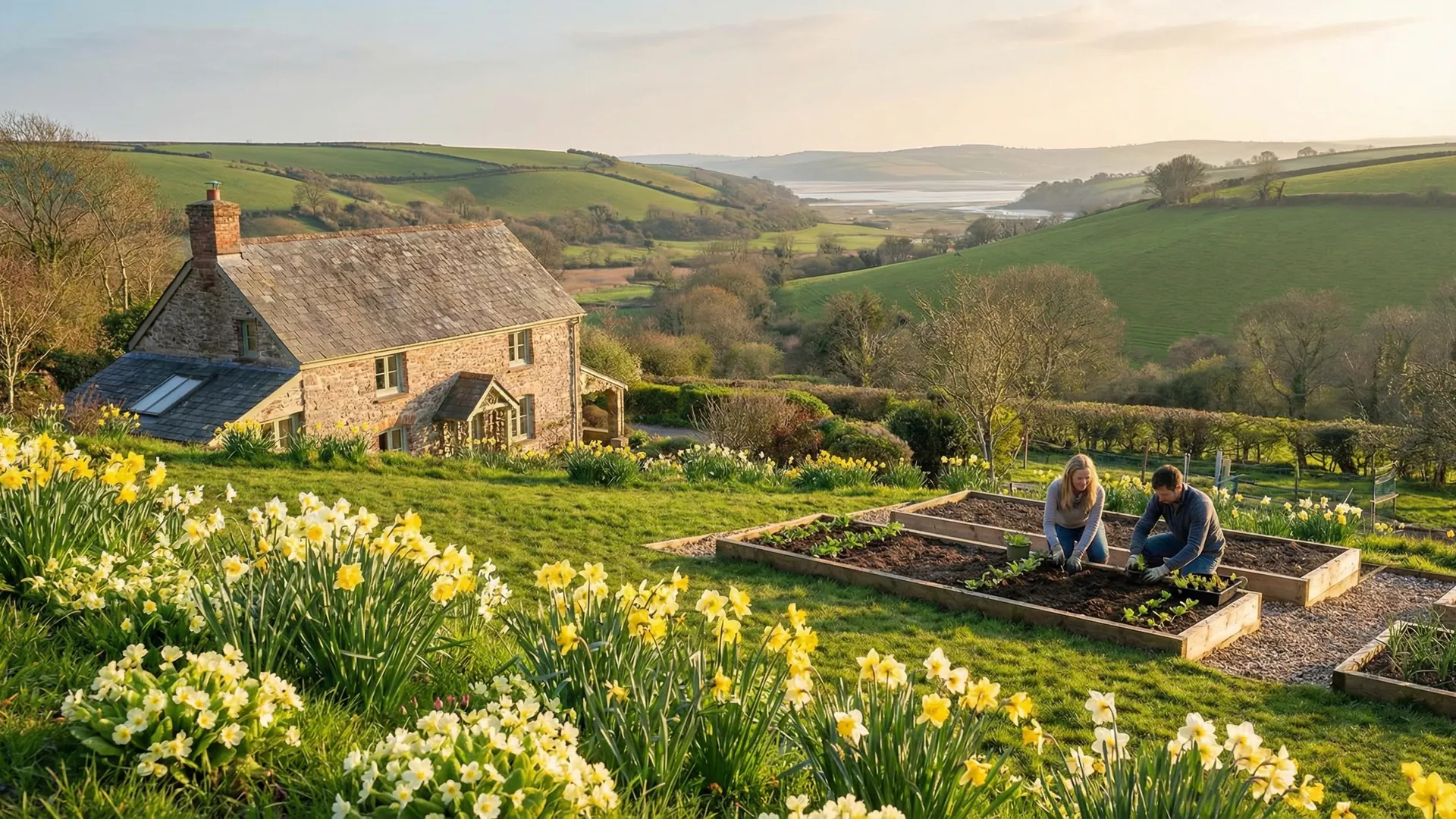
Spring is the most exciting time in the gardening calendar, and proper preparation is key to a successful growing season. Here's your complete guide to preparing your Devon garden for spring.
When to Start Spring Preparation
In Devon, spring preparation typically begins in late February or early March, depending on weather conditions. Watch for these signs:
- Soil temperature reaching 6°C or above
- Frost risk diminishing
- Days noticeably lengthening
- Early bulbs beginning to emerge
Essential Spring Preparation Tasks
1. Soil Assessment and Preparation
Test Your Soil
- Check pH levels (most plants prefer 6.0-7.0)
- Assess drainage and structure
- Identify nutrient deficiencies
Improve Soil Quality
- Add well-rotted compost or manure
- Incorporate organic matter for heavy clay soils
- Add grit or sand to improve drainage
- Apply lime if soil is too acidic
2. Clear Winter Debris
Remove accumulated debris from winter:
- Clear fallen leaves and branches
- Remove dead plant material
- Clean out gutters and drains
- Tidy borders and beds
- Dispose of diseased plant material properly
3. Prune and Trim
What to Prune in Spring:
- Summer-flowering shrubs (before new growth)
- Roses (late March/early April)
- Clematis (depending on type)
- Fruit trees (before bud break)
Pruning Tips:
- Use clean, sharp tools
- Make cuts at 45-degree angles
- Remove dead, diseased, or crossing branches
- Don't over-prune - less is often more
4. Lawn Care Revival
Spring Lawn Tasks:
- First mow when grass reaches 7-8cm
- Scarify to remove thatch and moss
- Aerate compacted areas
- Apply spring fertilizer
- Overseed bare patches
- Edge borders for neat finish
5. Weed Control
Early spring is ideal for weed control:
- Remove weeds before they seed
- Use mulch to suppress weed growth
- Hand-pull or hoe annual weeds
- Treat perennial weeds at root level
- Apply pre-emergent herbicides if needed
Planting Schedule for Devon
Early Spring (March)
Plant:
- Hardy vegetables (peas, broad beans, onions)
- Summer-flowering bulbs
- Bare-root roses and shrubs
- Herbaceous perennials
Sow Under Cover:
- Tomatoes
- Peppers
- Aubergines
- Half-hardy annuals
Mid-Spring (April)
Plant:
- Potatoes
- Early bedding plants
- Container plants
- Evergreen shrubs
Sow Direct:
- Carrots
- Beetroot
- Lettuce
- Radishes
- Hardy annuals
Late Spring (May)
Plant After Last Frost:
- Tender bedding plants
- Hanging baskets
- Tender vegetables
- Tropical plants
Garden Design Considerations
Spring is perfect for planning improvements:
New Borders and Beds
- Mark out new planting areas
- Remove turf or weeds
- Improve soil before planting
- Consider aspect and drainage
Hardscaping Projects
- Install new patios or paths
- Build raised beds
- Construct pergolas or arches
- Add garden edging
Water Features
- Clean and restart ponds
- Service pumps and filters
- Introduce new pond plants
- Check for leaks
Pest and Disease Prevention
Common Spring Pests in Devon:
- Slugs and snails
- Aphids
- Vine weevil
- Caterpillars
Prevention Strategies:
- Encourage beneficial insects
- Use organic pest controls
- Apply slug pellets or barriers
- Check plants regularly
- Remove affected leaves promptly
Feeding and Fertilizing
Spring Feeding Schedule:
Lawns: High-nitrogen fertilizer in March/April
Roses: Balanced rose feed in April
Shrubs: General-purpose fertilizer in March
Vegetables: Compost and organic fertilizers
Containers: Slow-release fertilizer when planting
Container and Hanging Basket Preparation
Prepare Containers:
- Clean pots thoroughly
- Check drainage holes
- Use fresh compost
- Add slow-release fertilizer
- Plan color schemes
Hanging Basket Tips:
- Wait until after last frost (mid-May)
- Use water-retaining gel
- Plant densely for impact
- Position in sheltered spots initially
Tool Maintenance
Service your tools for the season ahead:
- Clean and oil cutting tools
- Sharpen mower blades
- Service lawn mower
- Check hoses and sprinklers
- Organize shed and storage
Devon-Specific Considerations
Coastal Gardens
- Protect from salt spray
- Choose wind-resistant plants
- Provide windbreaks
- Improve soil regularly
Exposed Locations
- Stake tall plants early
- Create shelter with hedging
- Choose hardy varieties
- Mulch well to retain moisture
Shaded Gardens
- Select shade-tolerant plants
- Improve soil with organic matter
- Consider spring bulbs for early color
- Use lighter colors to brighten
Month-by-Month Spring Checklist
March
- [ ] Clear winter debris
- [ ] Start lawn care program
- [ ] Prune roses and shrubs
- [ ] Plant bare-root plants
- [ ] Sow hardy vegetables
- [ ] Prepare seed beds
April
- [ ] Continue planting
- [ ] Feed lawns and borders
- [ ] Sow tender crops under cover
- [ ] Divide perennials
- [ ] Apply mulch to beds
- [ ] Start regular weeding
May
- [ ] Plant tender bedding
- [ ] Harden off seedlings
- [ ] Plant hanging baskets
- [ ] Deadhead spring bulbs
- [ ] Monitor for pests
- [ ] Regular watering begins
Professional Services
Consider professional help for:
- Garden design: Creating new layouts and planting schemes
- Landscaping: Major hardscaping projects including patios and paths
- Turfing: Professional lawn installation for domestic and commercial properties
- Lawn renovation: Complete lawn overhaul and maintenance
- Decking: Quality decking installation and maintenance
Conclusion
Spring preparation sets the foundation for a beautiful garden throughout the year. By following this guide and adapting tasks to your specific garden conditions, you'll create a thriving outdoor space that rewards you with color, fragrance, and productivity.
Start early, work systematically, and don't try to do everything at once. Your Devon garden will thank you with months of beauty and enjoyment.
Need help with spring garden preparation? Contact us for professional landscaping services in Torquay and throughout Devon.